Trust automation is becoming one of the most important disciplines in modern cybersecurity.
Organizations are preparing for post-quantum cryptography. Certificate lifetimes are shrinking. Machine identities now outnumber human identities by orders of magnitude. AI systems are creating entirely new categories of non-human actors that require authentication, authorization, and cryptographic trust.
At the same time, security teams are being asked to do more with less. More certificates. More keys. More secrets. More signing operations. More compliance requirements. More automation. The old approach isn’t scaling.
Why the ILM Community Matters
For years, trust infrastructure has lived in silos. PKI teams manage certificates. Security teams manage secrets. Developers manage signing workflows. Cloud teams manage machine identities. Everyone owns a piece of the problem, but few organizations have a unified approach to managing trust across the entire lifecycle. We believe that has to change.
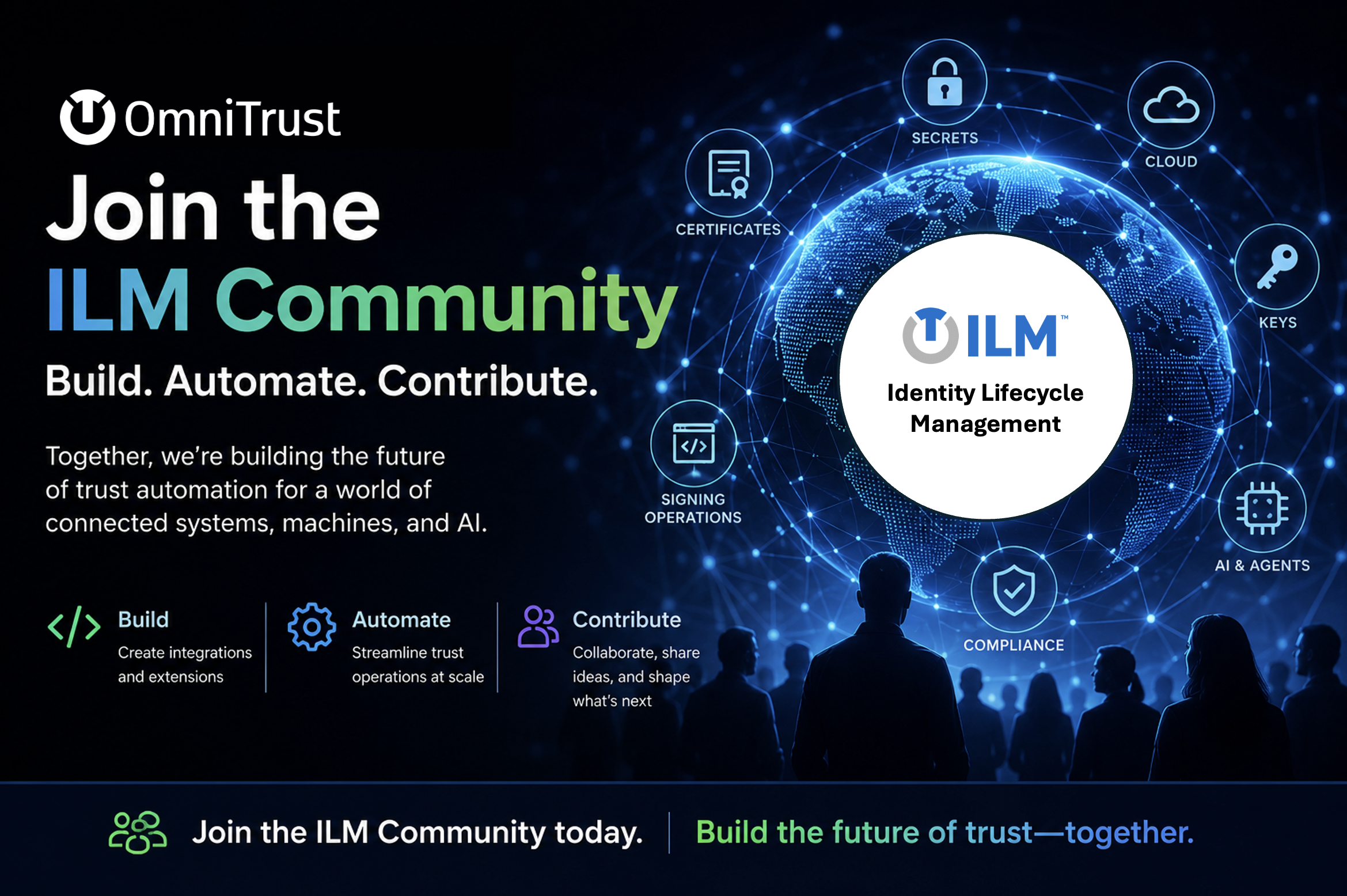
ILM was designed to help organizations manage the full lifecycle of cryptographic assets, including certificates, cryptographic keys, secrets, digital signatures, signing operations, and trust automation workflows. Rather than treating these as separate systems, ILM brings them together under a common lifecycle model. The result is greater visibility, stronger governance, and significantly more automation.
The ILM Community brings together developers, security professionals, architects, platform engineers, and contributors around a shared goal: making trust infrastructure easier to automate, integrate, govern, and scale. Built for builders, the community is designed for those solving real-world trust challenges. Whether you’re developing CA integrations, connecting vaults and HSMs, automating certificate operations, extending cloud-native workflows, or supporting post-quantum readiness initiatives, there’s a place for you to contribute. Some of the most valuable innovations in security infrastructure come from practitioners working in production environments every day. We want those ideas in the community.
To kick off our launch, hear from Roman Cinkais, SVP Enterprise Products at OmniTrust, as he introduces the ILM Community and shares how developers, security professionals, architects, and contributors can get involved.
Help Shape What’s Next
Trust infrastructure is becoming critical to everything from cloud-native applications and software supply chains to AI systems and post-quantum cryptography. The future of trust automation will be shaped by the people building, integrating, and securing these systems every day. That’s where the ILM Community comes in—and why we’re building ILM in the open.
Visit the ILM Community to explore the code, connect with peers, contribute your ideas, and help shape the future of trust automation.