Device Lifecycle Management (DLM)
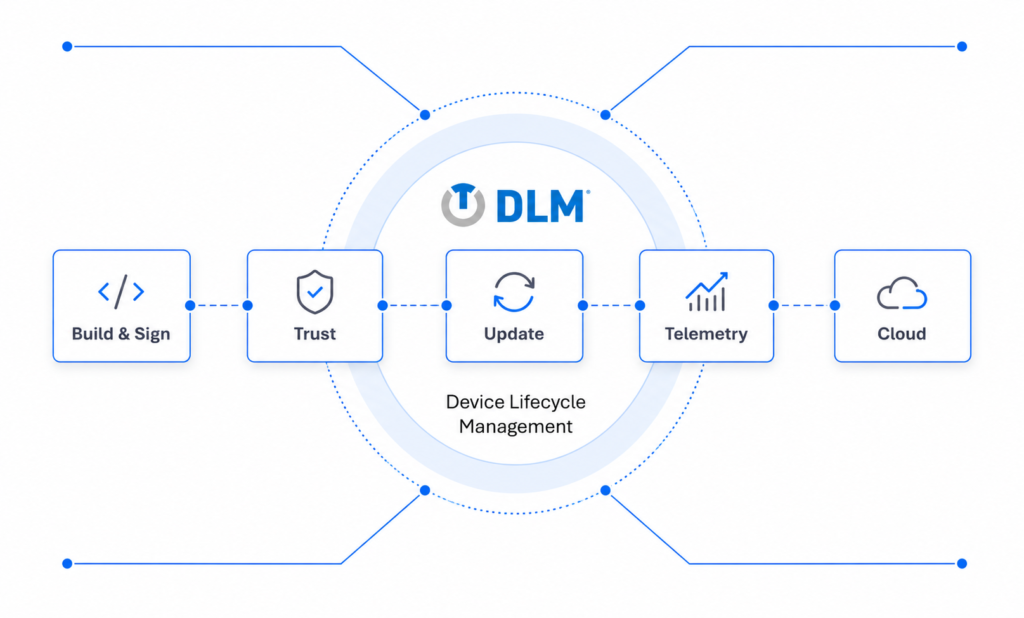
Device Lifecycle Management (DLM) helps manufacturers secure connected products from silicon and manufacturing through deployment, updates, service, and retirement. It combines secure provisioning, cryptographic identity, software integrity, lifecycle enforcement, and PQC-ready trust capabilities into one platform to continuously verify, update, authorize, and govern devices at scale.
Key Capabilities:
Device Trust Control Plane
A unified control plane for managing device identities, software updates, supply chain trust, manufacturing operations, and lifecycle security across embedded and connected products, IoT / OT.
Flex Security Foundation
Provide hardware-rooted security through secure boot, cryptographic services, key protection, firmware validation, and embedded trust enforcement.. PQC Ready.
OmniTrust PKI Trust Infrastructure
Deliver certificate issuance, enrollment, validation, revocation, and machine identity services for connected devices and operational environments.
Secure Updates & Signing
Protect firmware and software updates with code signing, integrity validation, secure delivery, and lifecycle update governance. Frictionless OTA updates for Software & Firmware.
Supply Chain & Provenance
Track product lineage, supplier relationships, SBOMs, manufacturing processes, and cybersecurity evidence across the device lifecycle.
AUTH Solutions & Trusted Ecosystems
Enable authenticated communications, trusted data exchange, and cryptographic authorization across vehicles, infrastructure, devices, operators, and connected ecosystems.
Products
- Ensures only verified code, firmware, and AI models run - preserving integrity across devices and systems.
- Detects and neutralizes runtime tampering or intrusion, enforcing cryptographic trust policies in real time.
- Provides adaptive resilience so mission-critical and autonomous systems remain secure, compliant, and operational.
- Establishes device identity and anchors the hardware root of trust at manufacturing and enrollment.
- Validates secure boot and verifies that only authenticated firmware, models, and configurations can execute.
- Enforces provenance and version integrity before operation, preventing rollback or unauthorized code.
- Works hand-in-hand with Flex for runtime enforcement and Cumulus for policy and audit continuity.
- Delivers authenticated OTA firmware and policy updates with full cryptographic validation.
- Prevents rollback and ensures only verified, authorized software or models can replace what is running.
- Provides fleet-wide update orchestration with integrity checks, audit logging, and standards-aligned compliance.
- Integrates with Trust (secure boot) and Flex (runtime verification) to maintain continuous assurance throughout the device lifecycle.
- Provides a real-time view of trust status across every device, system, and partner environment - showing what is running and whether it is verified.
- Tracks provenance by identifying where software, keys, and configurations originated, and whether they remain authentic throughout the supply chain.
- Highlights issues early by detecting outdated, missing, or altered components, helping teams investigate risks before they spread through the ecosystem.
- Connects with Flex and Trust to maintain continuous assurance across fleets, supply chains, and third-party ecosystems at operational scale.
Related Solutions
Secure supply chain and manufacturing trust requires continuous verification across devices, software, and partners. This solution establishes cryptographic trust from production to deployment, providing centralized visibility and control over assets, updates, and identities – across your organization and extended supply chain.
Assess & maintain continuous cyber trust across applications and infrastructure, with policy enforcement and audit-ready identity controls. Support evolving regulatory and industry requirements.
Modernize cryptography for the post-quantum era — with full discovery, assessment, and migration readiness.
Prepare for future cryptographic standards with managed certificate and key transitions. Enable secure hybrid algorithms without disrupting core business operations.
Featured Industries
Flex applies to any industry that depends on embedded, IoT, or connected devices and infrastructure. Wherever devices must operate safely and securely, Flex delivers runtime trust and resilience. Selected industries where Flex is in high demand include:
Related Case Studies
A leading A&D prime contractor supporting the U.S. Missile Defense Agency (MDA) was developing next-generation defense capabilities. The customer faced the critical challenge of securely delivering cryptographic key material and mission-critical firmware directly to deployed devices - while eliminating human touchpoints, reducing risk of compromise, and aligning with STIG compliance mandates. Traditional models depended on manual processes, air gaps, and on-prem security protocols that could no longer scale to the desired automation, assurance, and operational tempo.
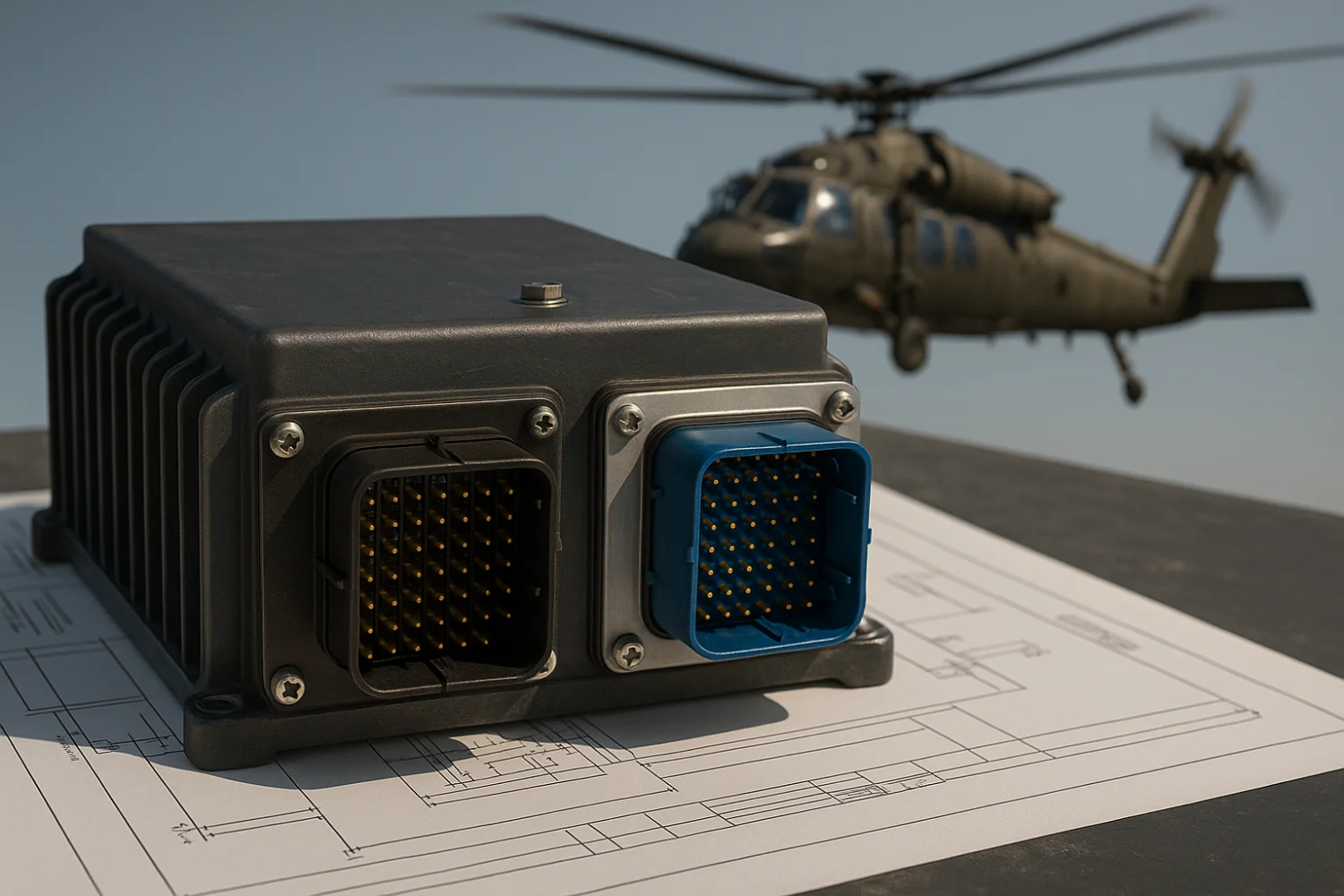
A leading supplier of mission-critical engine control units (ECUs) for U.S. military applications needed a way to securely transport firmware and key material to deployed systems - without relying on external connections, internet access, or physical vendor presence. The solution needed to meet government STIG standards, protect against tampering, and ensure end-to-end integrity from factory to edge-deployed systems.
Smart infrastructure operators face escalating risks as PLCs, SCADA systems, elevators, building management systems (BMS), and connected city services converge on digital networks. These assets are long-lived, safetycritical, and regulated under IEC 62443, SIL 3/4, and NIST SP 800-82. Challenges include legacy assets with expired credentials, PLC-driven elevators integrated into fire and BMS systems, and emergency phone lines converted to IP/VoIP, creating new attack surfaces. SCADA/DCS controllers managing power, water, and city services are also exposed to cyber and compliance risks, compounded by fragmented visibility across suppliers and infrastructure. To meet safety and regulatory demands, operators require a resilient, audit-ready trust foundation ensuring compliance and uptime.