Every work zone incident raises two urgent questions: Were workers protected, and can the agency prove what happened?
If you manage highway maintenance operations or work zone safety for a Department of Transportation, you know the daily struggle: How to keep roadside crews safe while simultaneously protecting your agency from legal exposure when incidents occur?
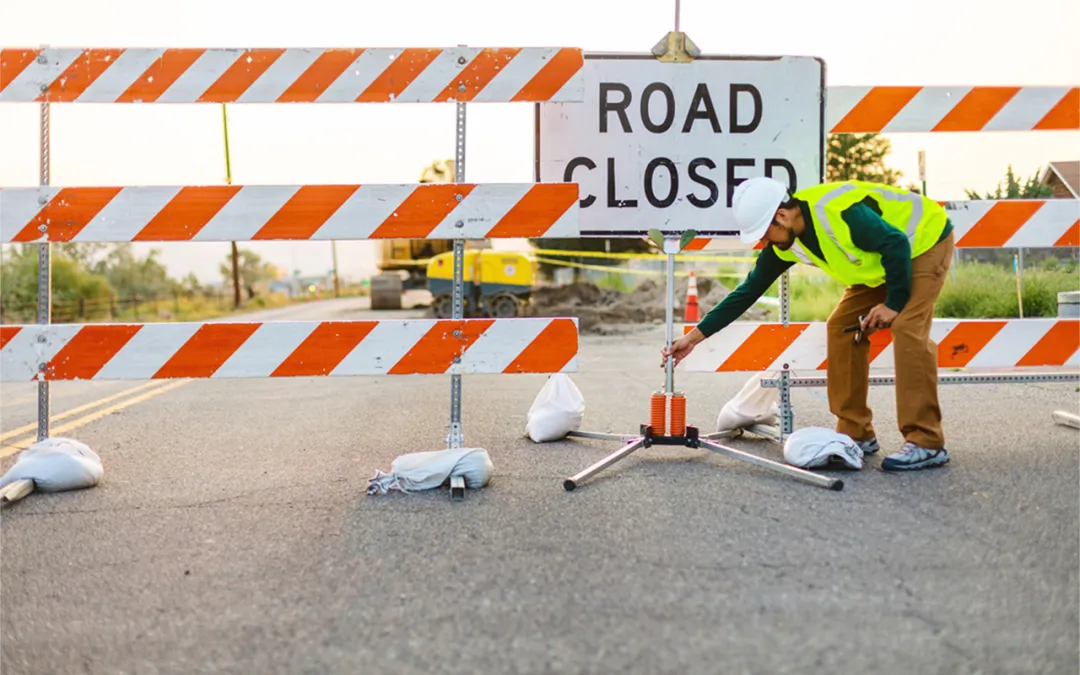
In many state and municipal DOTs—especially those operating automated work zone speed enforcement or safety programs—agencies often rely on manual workarounds. Safety teams frequently have to capture physical photo records or manual logs of workers in an active zone so that, in the event of an incident, the agency has time-stamped evidence for legal and insurance purposes.
While manual photos work, manual verification is slow, resource-heavy, and hard to scale across statewide corridors.
What if you could automate that entire process—protecting workers in real time while generating tamper-proof, defensible documentation automatically?
That’s where the TrafficAuth Mobile App and the National Mobility Interchange (NMI) come in.
How it Works: Turning Personal Safety Messages (PSMs) into Detailed Logs
By equipping highway crews with the TrafficAuth Mobile App, every worker becomes an authenticated, digitally visible node in the connected transportation ecosystem without sacrificing their privacy:
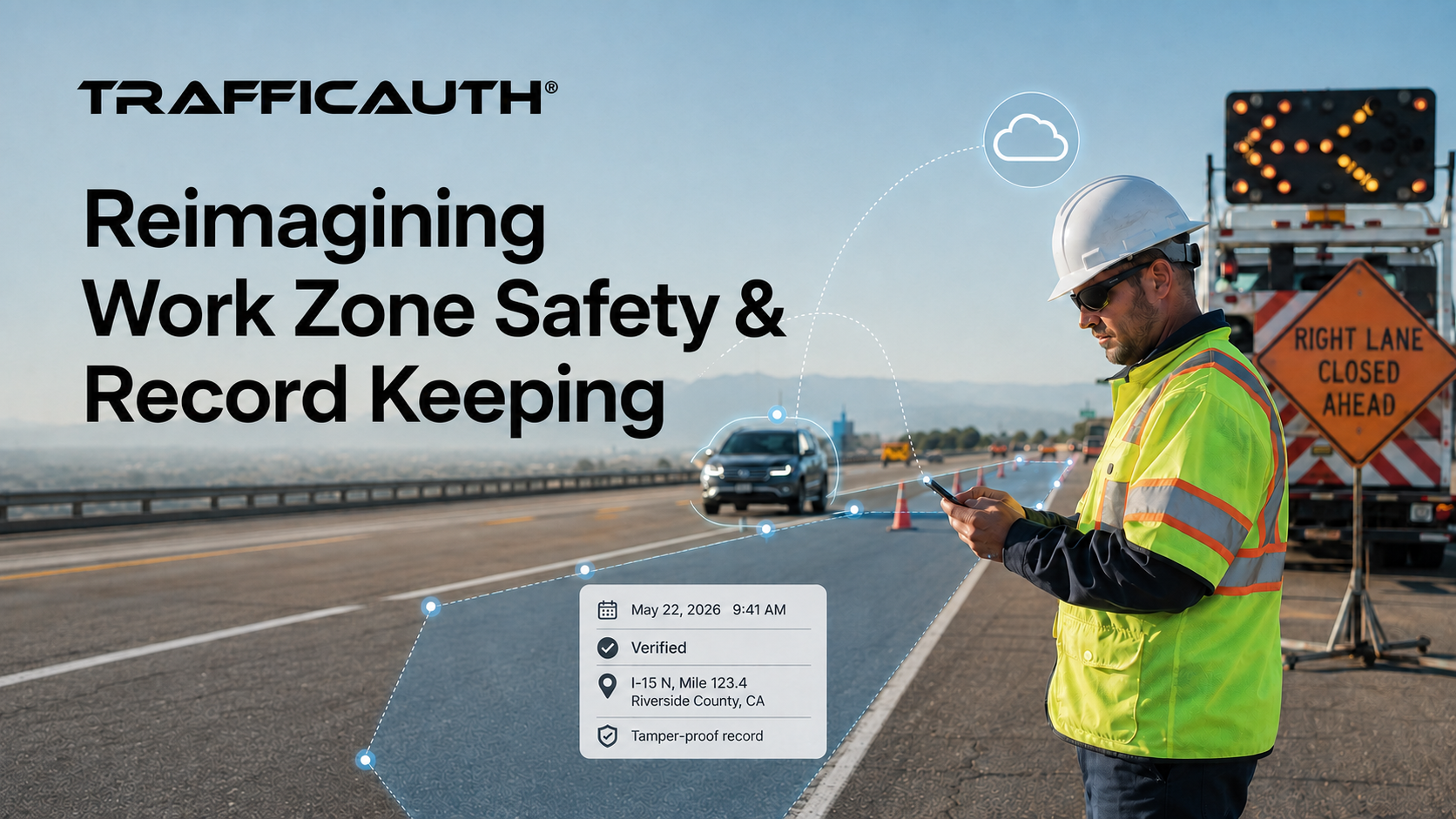
- Real-Time Worker Protection (In the Field): The mobile app leverages smartphone platform security to broadcast cryptographically signed SAE J2735 Personal Safety Messages (PSMs) over Network V2X (V2N) via our cloud-based National Mobility Interchange (NMI). Approaching drivers and connected fleets receive real-time, in-cab alerts, while roadside workers receive dynamic proximity warnings.
- Automated, Cryptographic Logging (In the Cloud): Instead of taking manual photos to prove worker presence inside an active work zone boundary, the NMI continuously validates incoming PSMs against digitally signed Traveler Information Messages (TIMs) that define the geofenced work zone.
- Court-Ready Incident Verification (In the Back Office): If an incident occurs—such as a reckless driver entering a lane closure—the system automatically compiles an Incident-Triggered Work Zone Presence Verification Report.
What “Defensible Documentation” Actually Looks Like
Rather than disputing blurry photos or handwritten shift logs, transportation agencies receive an automated, cryptographically sealed record:
- IEEE 1609.2 Security Standard Compliance: Every worker message is signed using an authenticated SCMS credential chain, verifying identity while maintaining worker anonymity (using anonymized token IDs like PSM-7A91).
- Micro-Accuracy at the Incident Timestamp: A precise, timestamped log of how many authorized workers were inside the zone, their exact distance from the incident (e.g., 5.2 meters), and whether any worker stepped into an active lane.
- Tamper-Evident SHA-256 Hashes: Every report is bound by a unique cryptographic hash and time-stamp, establishing an unbreakable chain of custody compliant with public records and DOT recordkeeping standards.
By combining real-time worker visibility with automated, cryptographically verifiable records, TrafficAuth helps agencies protect crews in the moment and strengthen accountability after an incident. The result is a scalable, defensible approach to work zone operations—one that supports investigations, reduces administrative burden and replaces manual snapshots with trusted proof.